






Understanding Repeated IVF Failures: Expert Insights by Dr. Gunjan Gupta Govil
Ghaziabad Branch
C-6, Shakti Khand 4,Near DPS, Next to Petrol Pump,
Indirapuram, Ghaziabad, UP – 201014.
For many couples, IVF treatment is a journey fueled by hope and the dream of parenthood. However, it can be deeply discouraging to undergo multiple cycles without achieving pregnancy, even when high-quality embryos are transferred. This challenging experience is medically known as Recurrent Implantation Failure (RIF), or more commonly, repeated IVF failures.
Understanding why these failures happen and what steps to take next is crucial for moving forward. As a leading Fertility clinic, we believe that transparency and specialized diagnostics are the keys to turning a setback into a success story.
What are Repeated IVF Failures?
Repeated IVF failures occur when a patient has multiple unsuccessful attempts despite the transfer of embryos that appear healthy. It is a complex situation where the embryo fails to “attach” or implant into the uterine lining. To find a solution for Recurrent Implantation Failure (RIF), our experts look closely at both the quality of the embryo and the receptivity of the uterus.
Deep Dive: Potential Causes of Repeated IVF Failures
Dr. Gunjan Gupta Govil identifies several critical factors that often contribute to these challenges:
- Advanced Maternal Age: As a woman ages, both the quantity and the quality of her eggs naturally decline. Advanced maternal age is a significant factor in Recurrent Implantation Failure (RIF), as eggs from older patients are more likely to have chromosomal issues, leading to embryos that struggle to implant or sustain a pregnancy.
- Embryo Quality & Genetics: Directly linked to maternal and paternal age, chromosomal abnormalities within the embryo are a primary cause of failure. Even if an embryo looks perfect under a microscope, internal genetic issues may prevent it from surviving the implantation process.
- Uterine Receptivity: Sometimes the “window of implantation” is displaced. If the uterus is not biochemically ready at the exact moment of transfer, the embryo cannot attach.
- Lifestyle Factors: Habits such as smoking or high alcohol consumption can negatively impact the uterine environment and the quality of both eggs and sperm.
- Nutrition & General Health: Poor diet, lack of essential vitamins, or underlying conditions like thyroid imbalances can lead to repeated IVF failures.
- Emotional Well-being: High levels of stress and anxiety can trigger physiological changes in the body that interfere with the delicate process of implantation.
Meet the Expert: Dr. Gunjan Gupta Govil
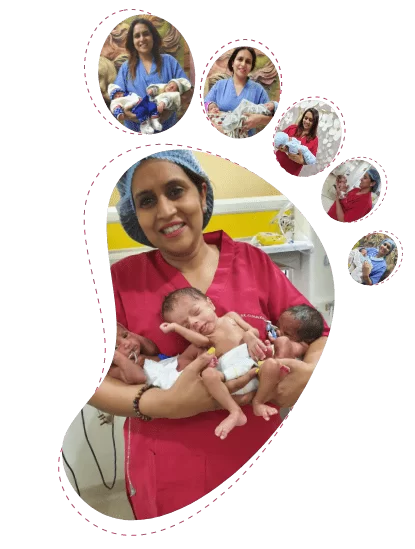
Dr. Gunjan Gupta Govil leads a team of over 50 fertility professionals and is a Fellow of the Royal College of Obs and Gynae (FRCOG) of UK. She has a specialized training in Laparoscopy from EUDGES (France) and has done her MD in Gynaecology from KGMC Lucknow. Her professional accomplishments speak of:
- 25+ years of experience with over 5,000+ IVF cycles.
- Successfully treated 25,000+ couples for infertility.
- Supervised 25,000+ baby deliveries.
- Awarded the International FOGSI Achiever Award in the UK Parliament and named IVF Icon of the Year 2025 by Economic Times.
Dr. Gunjan Gupta Govil is a noted speaker at National and International level conferences and has also chaired multiple sessions on Infertility and High-Risk Pregnancy management.
Solutions: How We Overcome Repeated IVF Failures
If you are facing the heartbreak of multiple unsuccessful cycles, advanced science offers several ways to improve your chances:
- PGT-A (Genetic Testing): This is especially helpful for cases involving advanced maternal age. By screening embryos for chromosomal health, we ensure we only use the most viable embryos, reducing the risk of Recurrent Implantation Failure (RIF).
- ERA (Endometrial Receptivity Analysis): This specialized biopsy helps us find your unique “window of implantation” so we can time your embryo transfer with surgical precision.
- Hysteroscopy: A procedure to examine the interior of the uterus and correct issues like polyps, fibroids, or scarring that might be physically blocking the embryo.
- EMMA (Endometrial Microbiome Analysis): This advanced test analyzes the “good” bacteria in your uterus. A healthy microbiome is essential for a successful pregnancy, and EMMA helps us ensure your uterine environment is perfectly balanced to support implantation.
Your Journey Continues at Gunjan IVF World
At Gunjan IVF World, we specialize in turning Recurrent Implantation Failure (RIF) into success stories through personalized protocols and cutting-edge technology. You don’t have to navigate this alone. Whether you are visiting our Delhi or UP centers, our team is dedicated to helping you finally have your baby.
Visit any of our state-of-the-art branches to start your second chance:
Don’t let a setback be the end of your story. Book an appointment at our Fertility clinic today.
Frequently Asked Questions: Overcoming Repeated IVF Failures
How many failed cycles are considered "repeated IVF failures"?
While every case is unique, the term Recurrent Implantation Failure (RIF) is typically used when a couple has undergone three or more IVF transfers with high-quality embryos without achieving a clinical pregnancy. However, at our Fertility clinic, we begin investigating deeper after two failed attempts to save patients time, emotional distress, and financial resources.
If my first IVF failed, does it mean my eggs are bad?
Not necessarily. While egg quality is a major factor, especially in cases of advanced maternal age, failure can also be caused by uterine environment issues, sperm DNA fragmentation, or even simple bad luck (embryo-endometrium asynchrony). We use advanced diagnostics like PGT-A to determine if the issue is chromosomal or related to the uterus.
Is there a specific diet to prevent repeated IVF failures?
There is no “magic” food, but a Mediterranean-style diet rich in antioxidants, healthy fats (Omega-3), and folic acid can improve the quality of the uterine lining and the health of the gametes. Dr. Gunjan Gupta Govil often recommends nutritional counseling to ensure your body is in the best possible state for implantation.
Does stress actually cause IVF failure? While stress alone is rarely the sole cause of Recurrent Implantation Failure (RIF),
While stress alone is rarely the sole cause of Recurrent Implantation Failure (RIF), it can lead to hormonal imbalances and decreased blood flow to the uterus. Managing stress through counseling or mindfulness helps the body stay in a “receptive” state.
Can I still have a baby with my own eggs after repeated failures?
Yes, many couples achieve success using their own eggs after we adjust the protocol. By using tools like the ERA test to find the perfect timing or PGT-A to select the best embryo, we significantly increase the chances of a successful pregnancy with self-eggs.
Next Steps
Facing repeated IVF failures is incredibly difficult, but you don’t have to navigate it alone. Our team at Gunjan IVF World is specialized in “rescue” cycles for couples who have lost hope elsewhere.
Your Consultation Checklist: Questions to Ask After Repeated IVF Failures
If you are preparing for a consultation at our Fertility clinic, use this checklist to ensure you get the clarity you need to move forward with confidence.
- Understanding the Previous Failures
- In your expert opinion, what was the most likely reason the previous embryos did not implant?
- Was the failure due to the “seed” (embryo quality/genetics) or the “soil” (uterine receptivity)?
- Did my advanced maternal age play a definitive role, or are there other underlying factors?
- Was my hormonal response during the stimulation phase optimal?
- Evaluating the Embryo (The Seed)
- Should we consider PGT-A (Genetic Testing) for the next cycle to screen for chromosomal abnormalities?
- Is there a need to check for sperm DNA fragmentation to improve embryo quality?
- Are there changes we can make to the lab protocol or culture medium to support better embryo development?
III. Evaluating the Uterus (The Soil)
- Would a Hysteroscopy be beneficial to rule out silent issues like micro-polyps or uterine scarring?
- Is my “window of implantation” standard, or should we perform an ERA (Endometrial Receptivity Analysis) test?
- Can we test my uterine microbiome using the EMMA test to check for healthy bacteria levels?
- Is my endometrial thickness reaching the required level for a successful transfer?
- Strategy for the Next Cycle
- How will the stimulation protocol be different this time to improve egg quality?
- Do you recommend a “Frozen Embryo Transfer” (FET) instead of a fresh one to give my body time to recover?
- Are there any additional medications (like blood thinners or immune suppressants) that might help in my specific case?
- What lifestyle changes or nutritional adjustments can I make to improve my chances?
Why Choose Gunjan IVF World for Your Second Opinion?
When you visit any branch of Gunjan IVF World, whether it’s in Delhi, Ghaziabad, Noida, or Meerut, you are backed by the expertise of Dr. Gunjan Gupta Govil and a team of 50+ professionals. We don’t believe in “one size fits all” protocols. We use these advanced diagnostic tools to build a custom roadmap for your success.
Ready to find the answers? Book an appointment at our Fertility clinic today.