






Comprehensive Fertility Treatments | Gynaecology Procedures | Menopause Management | Pregnancy Care | Maternity & Birthing
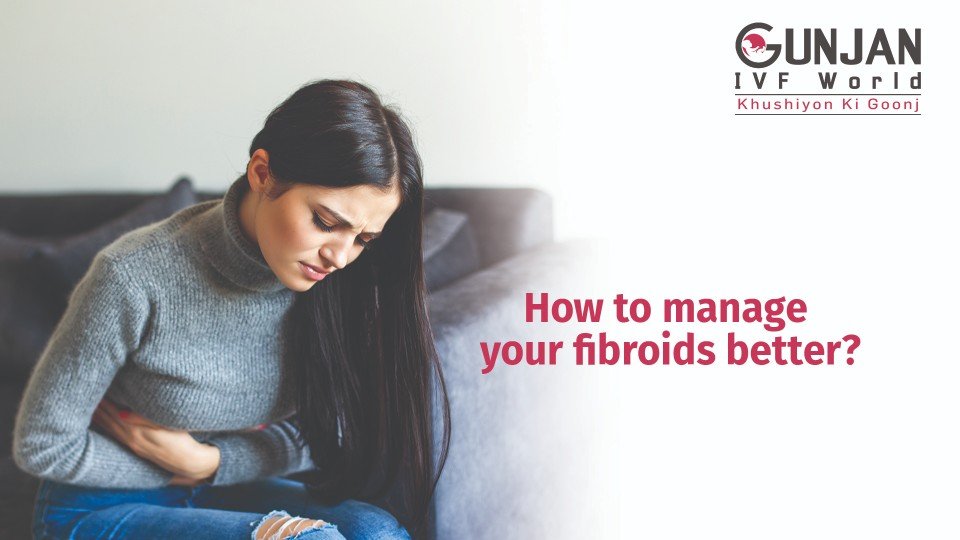
Read this interesting blog by IVF experts of the best IVF clinic in Ghaziabad – Gunjan IVF World on how to manage fibroids.
Fibroids are more common than you think. IVF experts of the best IVF centre in Delhi – Gunjan IVF World have penned an article about fibroids and how they can be managed.
What are fibroids?
“Uterine fibroids are non-cancerous fibrous growth that form in the uterus. They can also grow outside of the uterus (subserosal fibroids), inside the muscle of the uterus (intramural fibroids) or into the uterine cavity (submucosal fibroids). Fibroids are extremely common. 20-70% women develop fibroids during their reproductive years and in 99% of the time they are harmless,” stated Dr. Gunjan Gupta, well-known gynaecologist Ghaziabad and Founder & Medical Director of Gunjan IVF World – the best IVF clinic in Ghaziabad. Gunjan IVF World has four highly advanced IVF centres at Indirapuram, Janakpuri, Noida and Meerut and has been awarded as North India’s best IVF clinic chain three times in a row by ETHealthworld. “How one can manage fibroids depends on the size, location, symptoms and whether a woman is planning a pregnancy,” added Dr. Gunjan.
How to manage fibroids better?
Understanding fibroids: “The first in line management technique involves the understanding of the condition. Getting a proper diagnosis is very important and this is usually done through an ultrasound or MRI. Knowing the type of fibroid is also necessary. Is it intramural or submucosal or subserosal or pedunculated? Fibroids can be easily tracked from its symptoms which involves heavy periods, pelvic pain, bloating, frequent urination, constipation or fertility issues,” mentioned Dr. Garima Sharma, Centre In-Charge & Consultant at Gunjan IVF World – the best IVF clinic at Janakpuri.
Use of the correct medication: In cases of non-surgical treatment, fibroids are managed through medications and therapies. Hormone therapies like GnRH agonists help in shrinking fibroids temporarily, consuming birth control pills can also be effective in managing fibroids and progesterone-releasing IUDs also reduce bleeding and camping. Besides these, tranexamic acid can be taken for heavy bleeding. Pain relievers like ibuprofen can also help manage cramps and discomfort.
Lifestyle and diet modification: “What you eat is very important. Eating leafy greens, berries, turmeric, ginger is good as they contain anti-inflammatory properties. Iron-rich food is of great help in cases of heavy bleeding and anemia. Increased fiber intake helps to balance estrogen while cutting down of estrogen-boosting food like red meat, dairy and processed sugar can help manage fibroids. Regular exercises are a must because it helps to reduce fibroids symptoms and improve hormonal balance,” stated dr. Gunjan Gupta.
Surgical and non-surgical treatments: “In cases that require surgical intervention the most common treatments include myomectomy where fibroids are removed keeping the uterus intact. This is best-suited for women who plan to have children. Hysterectomy is another option where the uterus is removed completely while in endometrial ablation, the uterine lining is destroyed to reduce bleeding and is not recommended if a woman wants a pregnancy in the future. Non-surgical treatment involves minimally-invasive options like Uterine Artery Embolisation (UAE) – a technique in which the blood flow to the fibroids is blocked making them shrink in size. Another treatment technique is MRI-guided Focused Ultrasound Surgery (FUS) that uses sound waves to destroy fibroid tissues,” said Dr. Garima Sharma.
Consult a fertility specialist: Last but not the least, consult a gynecologist or reproductive endocrinologist to manage the condition. Meet a fertility specialist if you plan to manage the condition and embrace motherhood.
20+ Years Of Experience as Fertility Specialists
20 Years Of Experience as a Fertility Specialists
National Fertility Awards 2023

Call Us
+919990044555
Book An Appointment
Follow Us On
Related Blogs

TSH Normal Range During Pregnancy: A Trimester-Wise Guide
Comprehensive Fertility Treatments | Gynaecology Procedures | Menopause Management | Pregnancy Care | Maternity & Birthing Call +919990044555Understand the trimester-wise TSH normal range during pregnancy, what abnormal TSH levels may indicate, available treatment...

PCOD Symptoms: Early Warning Signs Every Woman Should Know
Comprehensive Fertility Treatments | Gynaecology Procedures | Menopause Management | Pregnancy Care | Maternity & Birthing Call +919990044555Learn about common PCOD symptoms, early warning signs, their link with fertility, and treatments available. PCOD Symptoms...
Follow Us On
About Author

Dr. Gunjan Gupta
Gynecologist and IVF specialist
 Verified & Most Trusted One
Dr. Gunjan Gupta is a Gynaecologist with a specialization in IVF, Infertility & Laparoscopy specialist doctor and has close to 2 decades of experience in : Treating Infertility, Performing Gynae Laparoscopy (Keyhole Surgeries) Handing high-risk Pregnancies. She is a Member of Royal College of Obs and Gynae (MRCOG) of UK and has been trained in Laparoscopy at EUDGES (France).
To book an appointment, call: +919990044555