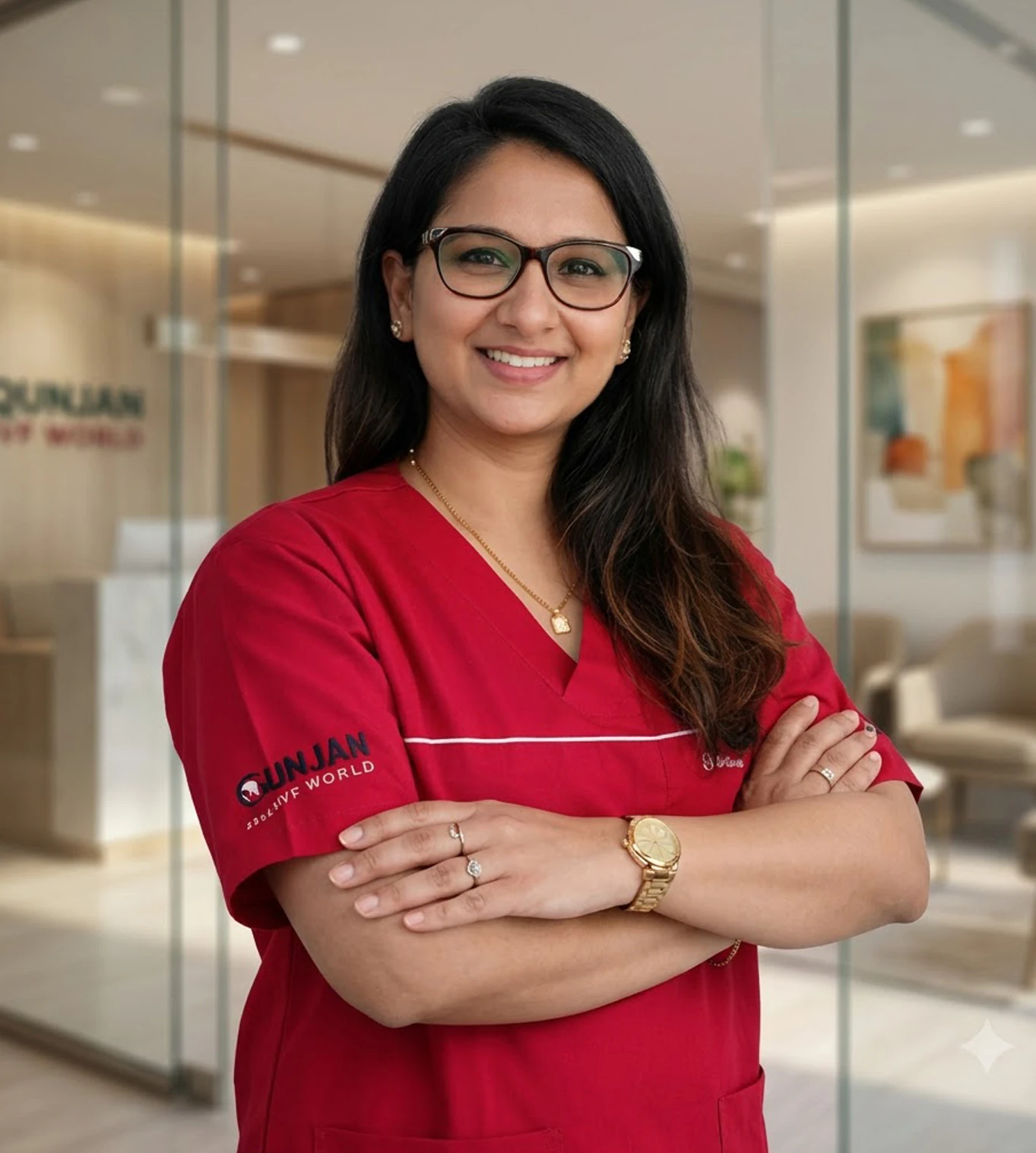
Anonymised clinical case pathways illustrating how Dr. Aastha Raheja approaches complex fertility and reproductive challenges.
Diminished Ovarian Reserve
We were told our chances were too low to try again.
Meera and Vikram arrived exhausted after being advised to give up on using their own eggs due to an AMH level below 0.5. At 34, Meera felt overwhelmed by conflicting advice and rushed decisions. Previous attempts had produced few eggs and minimal growth, leaving them uncertain whether another tailored cycle was even possible.
Dr. Aastha Raheja redesigned their protocol using a customized mild-stimulation framework combined with careful follicle monitoring. Focus was placed on egg quality rather than quantity. Two targeted retrieval cycles yielded high-grade blastocysts. Following a precisely prepared frozen transfer cycle, Meera conceived successfully and delivered a healthy baby girl.
Unexplained Infertility
Every test came back normal, yet we couldn't conceive.
Anjali and Sumeet had been trying for over four years with no clear medical answer. Standard blood panels, semen analysis, and basic scans all showed optimal health, making their inability to conceive deeply frustrating. After two unmonitored IUI failures elsewhere, they felt lost, seeking an expert who would look beyond surface-level results to find a clear path forward.
Dr. Aastha Raheja initiated advanced diagnostic mapping, identifying subtle uterine lining irregularities and sperm-egg binding issues previously undetected. By switching to a precision ICSI cycle paired with extended blastocyst culture, high-quality embryos were developed. A single, meticulously timed embryo transfer resulted in a positive pregnancy, and they welcomed their son nine months later.
Genetic Factors & Recurrent Loss
We kept losing pregnancies without knowing why it kept happening.
Neha and Rohan had suffered three consecutive early pregnancy losses within two years. Each heartbreak was followed by inconclusive answers, leaving them terrified to try again. Karyotype testing eventually revealed a balanced chromosomal translocation, meaning their natural pregnancies had a high risk of lethal genetic imbalances, requiring advanced genetic screening before transfer.
Dr. Aastha Raheja guided them through an IVF cycle combined with Preimplantation Genetic Testing for Structural Rearrangements (PGT-SR). Biopsied blastocysts were analyzed to identify genetically normal, euploid embryos. A single tested embryo was transferred into a prepared uterine environment, resulting in a healthy pregnancy and the birth of their baby boy.