


What You Need to Know (30-Second Summary)
- Beyond Routine Semen Checks: High DFI (>30%) causes Day-3 embryo arrest and doubles first-trimester loss despite normal sperm counts.
- Oxidative Stress Driver: Testicular varicoceles, smoking, scrotal heat, and lifestyle stress generate reactive oxygen species that tear sperm DNA.
- The 74-Day Turnaround: Spermatogenesis takes 74 days; targeted antioxidant therapy (CoQ10, zinc, selenium) lowers DFI within three months.
- Varicocele Correction: Microsurgical varicocelectomy cools scrotal temperature, dramatically reducing DNA breaks within three to six months.
- Advanced Selection: Magnetic-Activated Cell Sorting (MACS) and TESA testicular retrieval isolate sperm with undamaged DNA for ICSI.
A normal sperm count is not enough. Motility alone does not guarantee healthy genes. In recurrent miscarriages, fragmented sperm DNA is often the hidden culprit.
For decades, reproductive medicine relied entirely on the conventional semen analysis.
"Sperm DNA fragmentation is often the hidden cause behind unexplained IVF failures. Testing for it and addressing the underlying causes — oxidative stress, varicocele, lifestyle — can transform outcomes."
A man gave a sample. The technician counted thirty million sperm, noted forty percent motility, and marked the report normal.
Yet when the couple underwent IUI or IVF, disaster struck.
Embryos arrested on Day 3. Transfers failed repeatedly. Or the wife suffered heartbreaking early miscarriages at six or seven weeks.
Doctors called it "unexplained infertility".
Today, we know that many of these unexplained failures stem from high Sperm DNA Fragmentation.
A standard microscope evaluates macroscopic appearance: does the sperm have a head, a tail. Can it swim.
It provides zero insight into the integrity of the genetic code packaged inside that sperm head.
DNA fragmentation measures breaks and lesions inside the paternal chromosomes.
Damaged paternal DNA halts embryonic development. Cells stop dividing. Miscarriage risks double.
The Biology of Sperm DNA Fragmentation
To understand DNA fragmentation, you must understand how sperm are manufactured.
During the final stages of spermatogenesis, developing sperm shed almost all their cytoplasm to become streamlined swimmers.
Sperm package their DNA tightly. Histones are replaced by protamines. This forms a dense protective shield.
Protamines cross-link through disulfide bonds, packaging the paternal DNA into an extraordinarily dense, tightly coiled crystalline structure.
This tight packaging shields the genetic strands from chemical and physical damage.
If protamination is incomplete, the shield fails. Free radicals attack exposed DNA. Strands fracture.
Reactive Oxygen Species, or free radicals, attack the exposed DNA strands.
They trigger single-strand DNA breaks and double-strand DNA breaks.
An egg can be fertilised by a sperm carrying severe DNA fragmentation.
The sperm swims. It binds. It fertilises normally. But inside, its genetic strands are broken.
During the first forty-eight hours, the embryo runs on maternal energy and maternal enzymes stored inside the egg cytoplasm.
Young, healthy eggs have repair enzymes. They can fix minor single-strand breaks. But severe damage overwhelms them.
However, between Day 3 and Day 4, a major biological threshold occurs: Embryonic Genome Activation.
The embryo activates its own genetic machinery. The father's DNA wakes up.
If the paternal DNA strands carry massive double-strand breaks that overwhelm the egg's repair capacity, embryonic development halts cold.
Cell division halts on Day 3. The embryo arrests. It fails to form a blastocyst.
Damaged DNA compromises the embryo. Even if it implants, it frequently arrests. You experience an early loss.
Advanced Diagnostic Assays for DNA Fragmentation
Sperm DNA Fragmentation is measured as the DNA Fragmentation Index, or DFI.
DFI represents the percentage of sperm cells in a sample carrying damaged DNA.
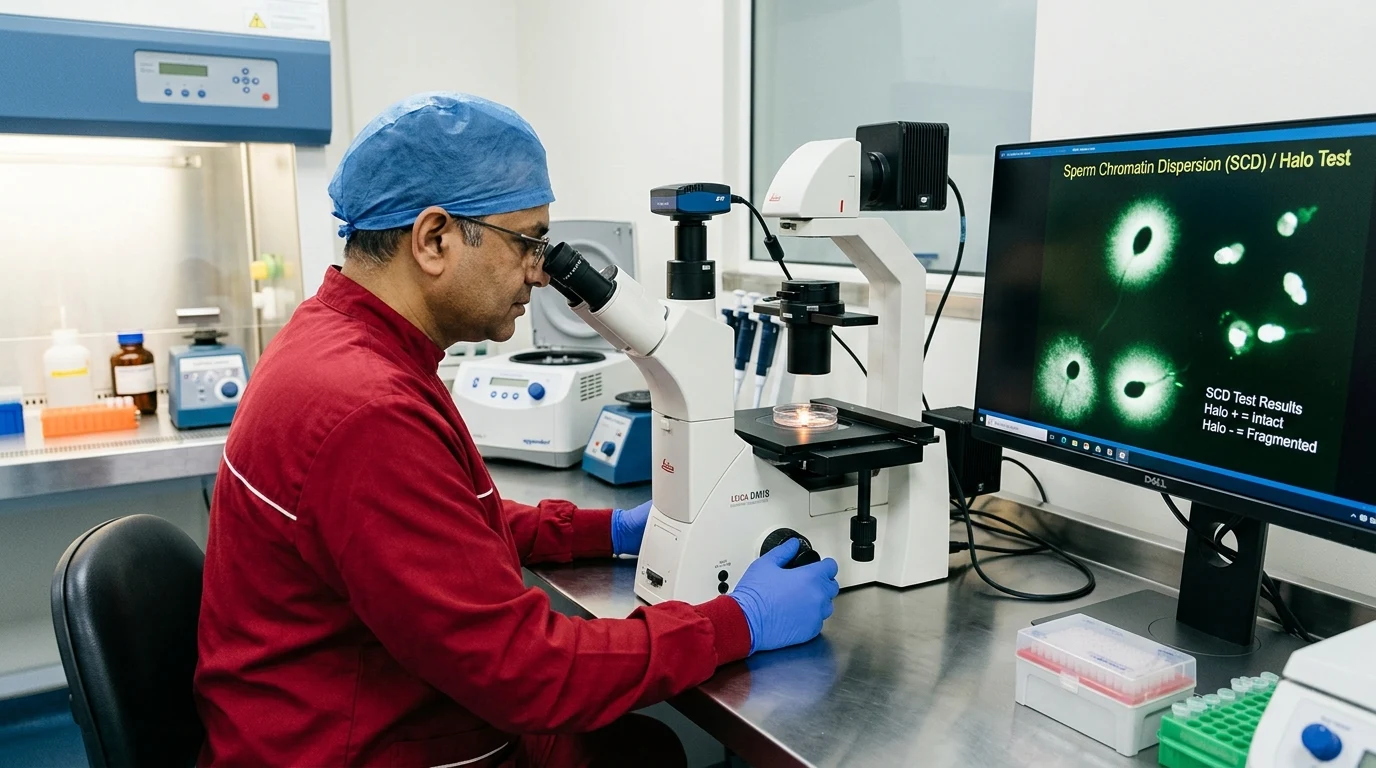
Advanced Andrology Assays for Measuring Sperm DFI
In the Halosperm chromatin dispersion assay, intact sperm produce large luminous halos under the microscope. Intact sperm form large luminous halos. Fragmented sperm produce tiny halos or no halo at all.
With the TUNEL assay, fluorescent tags attach directly to fractured DNA ends for flow cytometry counting. Fluorescent markers tag broken DNA ends directly. Flow cytometry counts damaged cells with high precision.
The Sperm Chromatin Structure Assay measures susceptibility to acid denaturation with high precision. Sperm Chromatin Structure Assay measures the susceptibility of sperm DNA to acid denaturation using acridine orange staining.
How We Interpret DFI Numbers
When your DFI report arrives, here are the clinical benchmarks we enforce:.
A DFI score below fifteen percent indicates excellent DNA integrity and fertile potential. Excellent DNA integrity. High statistical likelihood of natural conception and excellent IUI/IVF outcomes.
A DFI score between fifteen and twenty-five percent reflects moderate fragmentation. Moderate DNA fragmentation. Natural conception is possible but may experience delays. Good prognosis with IVF.
A DFI score above twenty-five percent signifies severe DNA breaks that impair blastocyst progression. High DNA fragmentation. Significantly reduced natural and IUI pregnancy rates. High rates of embryo arrest, failed blastocyst development, and doubled miscarriage risks.
What Causes Sperm DNA Fragmentation?
High DFI is driven primarily by excessive oxidative stress in the male reproductive tract.
Key clinical drivers include several treatable physiological factors. Scrotal varicoceles pool warm blood and generate intense oxidative stress that fractures DNA bonds. Stagnant, heated blood pools reactive oxygen species. Free radicals damage testicular tissue.
Smoking tobacco, vaping, and poor dietary habits flood seminal plasma with damaging free radicals. Tobacco smoking, vaping, recreational drugs, excessive alcohol consumption, and obesity.
Scrotal heat exposure from hot baths, saunas, and resting laptops on the lap impairs cellular repair. Frequent saunas, hot baths, and laptops rested on the groin overheat the testes.
Subclinical prostatitis or epididymitis fills semen with inflammatory white blood cells. Silent leukocytospermia, chlamydial or mycoplasma infections, and chronic prostatitis.
Men over forty show higher proportions of sperm breaks due to waning natural antioxidant defenses. Men over forty produce higher proportions of sperm with fragmented DNA and declining antioxidant defenses.
When sperm remain stored in the epididymis for many days, oxidative exposure accumulates. When sperm remain stored in the epididymis for many days, they suffer prolonged exposure to oxidative free radicals, driving DFI up.
Evidence-Based Strategies to Lower DFI
The clinical reality is encouraging because sperm DNA fragmentation is highly treatable. and reversible in the vast majority of men.
Structured Medical Protocol to Reduce Sperm DNA Fragmentation
Eliminating Testicular Heat and Toxins Sperm are extraordinarily sensitive to temperature. Avoid hot baths, tight synthetic underwear, and resting laptops directly on the lap. Stop all cigarette smoking and vaping immediately.
Quit smoking today. Eliminate nicotine completely. Stop alcohol. Keep your testes cool.
Eliminate scrotal heat by avoiding hot tubs, keeping laptops off the lap, and wearing loose boxers. no hot tubs, no lap computers, wear loose boxer shorts.
Adopt a Mediterranean-style diet packed with antioxidant-rich fruits, nuts, leafy greens, and omega-3 fatty acids.
Targeted High-Potency Antioxidants We prescribe medical-grade antioxidants for three months: Coenzyme Q10, L-Carnitine, Vitamin C, Vitamin E, Zinc, and Selenium to neutralize reactive oxygen species in seminal fluid.
We prescribe a therapeutic three-month antioxidant regimen to neutralize reactive oxygen species:.
Prescribing Coenzyme Q10 at 200 to 400 mg daily enhances mitochondrial energy and antioxidant protection. Enhances mitochondrial function and cellular energy.
L-Carnitine supplements facilitate essential fatty acid metabolism in sperm membranes. Facilitates fatty acid metabolism and protects sperm membranes.
Vitamin C (500 to 1000 mg) and Vitamin E (400 IU daily): Potent systemic free radical scavengers.
Zinc and selenium provide essential trace minerals for proper nuclear protamination. Essential trace minerals for protamination and spermatogenesis.
The Short Ejaculatory Abstinence Protocol Sperm stored in the epididymis for days accumulate massive oxidative damage. We advise men with high DFI to adopt a short abstinence window of barely 24 to 48 hours before sample collection.
This is a powerful, zero-cost clinical intervention.
Standard laboratories recommend two to five days of abstinence.
However, in men with high DFI, prolonged storage in the epididymis is toxic.
We instruct the husband to ejaculate frequently before retrieval. The final sample is produced after barely twelve to twenty-four hours of abstinence.
This rapid-turnover protocol dramatically reduces transit time through the oxidatively hostile epididymis, cutting DFI by up to fifty percent on retrieval morning.
Fourth, Advanced Laboratory Selection: MACS, PICSI, and TESA.
Physiological Sperm Selection Technologies in the Cleanroom
Magnetic-Activated Cell Sorting (MACS) passes sperm through an Annexin V magnetic column, removing apoptotic sperm with fragmented DNA.
Physiological ICSI (PICSI) selects mature sperm that bind to hyaluronic acid.
In men with persistent, refractory DFI above forty percent, we perform Testicular Sperm Aspiration (TESA).
Testicular sperm have not traveled through the epididymis where oxidative damage occurs.
Clinical studies demonstrate that testicular sperm carry significantly lower DNA fragmentation than ejaculated sperm in the same man, dramatically improving blastocyst rates and live births.
Take Control of Your Sperm Genetics
Do not accept a simple semen count as the complete picture if you have faced failed cycles or miscarriages.
Test your DNA Fragmentation Index.
Treat oxidative stress. Optimize your collection timing. Deploy advanced laboratory selection.
Healthy sperm DNA creates strong embryos and healthy babies.
Single-Strand Versus Double-Strand DNA Breaks
Not all sperm DNA damage carries the same clinical consequences.
Single-Strand vs. Double-Strand DNA Breaks: What the Difference Means
Single-strand breaks affect only one of the two complementary DNA strands and can often be repaired by the oocyte. A break in only one of the two complementary strands of the DNA double helix.
Single-strand breaks are primarily generated by oxidative stress.
Young, high-quality human oocytes possess robust base excision repair enzymes.
When a sperm carrying single-strand breaks enters an egg from a young woman (under thirty-five), the egg's repair machinery can successfully stitch the single-strand break back together before cellular cleavage begins.
Natural conception and IUI pregnancy can still occur.
Double-strand breaks sever both strands simultaneously, creating lethal chromosomal lesions that arrest development. Simultaneous breaks across both complementary strands of the DNA double helix at the exact same location.
Double-strand breaks represent catastrophic structural damage.
They are generated by intense free radical cascades, ionizing radiation, chemotherapeutic toxins, or severe protamination defects.
The oocyte cannot easily repair double-strand breaks.
When paternal DNA with double-strand breaks attempts to activate on Day 3 or Day 4, the embryonic replication machinery stalls.
Cellular division halts completely. The embryo undergoes mitotic arrest.
If an embryo with double-strand breaks manages to implant, it almost inevitably results in early first-trimester miscarriage.
Advanced testing assays like the neutral Comet assay can differentiate between single and double-strand breaks. This provides precise prognostic counseling.
Occupational Heat Exposures and Counter-Measures
A primary, preventable driver of high DFI is chronic occupational heat exposure.
Certain professions place men at extreme risk of scrotal hyperthermia:.
Long-Distance Drivers and Desk Workers: Sitting motionless in car seats or office chairs for eight to ten hours a day traps scrotal heat, raising testicular temperature by up to two degrees Celsius.
Occupations near industrial ovens and furnaces expose the groin to continuous radiated heat. Standing near open industrial ovens, tandoors, and commercial stovetops for prolonged shifts.
Ceramic, Glass, and Metal Workers: Daily exposure to industrial kilns and smelting furnaces.
Immersing the scrotum in water above thirty-eight degrees directly suppresses spermatogenesis. Immersing the scrotum in water above 38 degrees Celsius causes acute thermal shock to germ cells.
If your profession involves chronic heat exposure, implement daily protective counter-measures:.
Stand up every forty-five minutes. Walk for five minutes to allow scrotal cooling.
Wear loose, breathable cotton boxers. Avoid tight synthetic briefs or compressive cycling shorts.
Avoid heated car seats.
Apply a cool water compress or ice pack wrapped in a cloth to the groin for ten minutes in the evening after high-heat shifts.
Microfluidic Sperm Sorting in the Cleanroom
In the embryology laboratory, the newest breakthrough in lowering DNA fragmentation during IVF is Microfluidic Sperm Sorting, commercially known as the ZyMōt device.
Traditional laboratory sperm processing relies on Density Gradient Centrifugation.
The semen sample is spun at high speeds in a centrifuge.
Centrifugation generates shear stress and forces living sperm against dead cells and debris, paradoxically increasing reactive oxygen species and DNA fragmentation.
Microfluidic chips eliminate centrifugation entirely.
The microfluidic device mimics the natural passage through the cervical canal.
The semen sample is placed in a lower chamber beneath a specialized micro-porous membrane.
The membrane contains millions of microscopic cylindrical channels calibrated to the exact size of motile sperm.
A warm, nutrient-rich culture media rests in the upper chamber.
Only the most vigorous, healthy sperm with normal membrane flexibility and high motility can swim upward through the micro-pores into the upper chamber.
Sperm with fragmented DNA, damaged membranes, or abnormal head morphology lack the swimming velocity and flexibility required to navigate the pores.
The harvested sperm from the upper chamber show near-zero DNA fragmentation, exceptional morphology. Superior blastocyst formation rates.
Test your DNA Fragmentation Index. Treat oxidative stress. Shorten your abstinence. Protect your future baby.
📚 Recommended Clinical Guides
Frequently Asked Questions About Sperm DNA Fragmentation: Testing, Causes, and How to Lower DFI for IVF
How does DFI differ from a routine semen analysis?
A routine semen analysis looks at sperm count, movement, and physical appearance under a standard microscope. A DFI test evaluates the internal integrity of the genetic material inside the sperm head.
Can high sperm DNA fragmentation cause birth defects?
Severely damaged sperm typically fail to fertilise the egg or cause the resulting embryo to arrest early, leading to miscarriage. Blastocysts that survive and develop into healthy pregnancies show normal health and development.
How long does it take to lower high DFI?
Spermatogenesis takes approximately seventy-four days. Lifestyle adjustments, antioxidant therapy, and varicocele repairs require three months of disciplined commitment before a repeat test shows lower DNA fragmentation.
Does frequent ejaculation help lower DFI?
Yes. Shorter abstinence periods of one to two days prevent sperm from sitting in the epididymis where oxidative damage accumulates. Frequent ejaculation consistently reduces DNA fragmentation levels.
When is testicular sperm retrieval recommended for high DFI?
If high DFI persists above thirty percent despite antioxidant therapy and varicocele repair, TESA retrieves sperm directly from the testicles. Testicular sperm consistently shows lower DNA fragmentation than ejaculated sperm. Paternal Genome Activation: The Day-Four Embryo Hurdle For decades, reproductive medicine viewed sperm merely as a transport vehicle delivering DNA to the egg. If a semen analysis showed good count and motility, doctors assumed sperm genetics were healthy. Modern molecular andrology proves this assumption wrong. A sperm can swim vigorously and fertilise an egg while carrying shattered internal DNA. To understand why high DNA fragmentation causes IVF failure, observe what happens on Day 4 of culture. During the first three days after fertilization, an embryo divides using genetic instructions stored in the egg cytoplasm. Even an embryo created with severely damaged sperm DNA can look like a beautiful eight-cell embryo on Day 3. Between Day 3 and Day 4, a critical genetic handoff occurs. The combined embryonic genome switches on for the first time. The father genetic code activates. If that paternal DNA carries extensive double-strand breaks, cellular machinery detects the damage. The embryo stalls in division, undergoes apoptotic cell death, and arrests before reaching the blastocyst stage. Testing Sperm DNA Fragmentation: SCSA vs Halosperm Standard semen analysis inspects physical sperm contours under a microscope. It cannot visualize microscopic DNA strand breaks coiled tightly inside the sperm nucleus. Sperm DNA Fragmentation Index (DFI) testing directly measures genetic integrity. Two primary assays are utilized: the Sperm Chromatin Structure Assay (SCSA) and the Halosperm test. The Halosperm assay uses acid denaturation followed by microscopic visualization of DNA dispersion halos. Sperm with intact DNA produce a large, vibrant halo of relaxed DNA loops around the head. Sperm with fragmented DNA produce a tiny, pinched halo or no halo at all. A DFI below fifteen percent indicates excellent sperm DNA integrity. A DFI between fifteen and twenty-five percent reflects moderate fragmentation. A DFI exceeding twenty-five or thirty percent indicates severe DNA damage. High DFI reduces blastocyst formation rates, doubles early miscarriage risks, and causes unexplained IUI and IVF failures. Lowering DFI: The 74-Day Reset and TESA Options Fortunately, elevated sperm DNA fragmentation is reversible in most men. Human spermatogenesis takes approximately seventy-four days. This biological timeline gives us an effective window to repair sperm genetics. Most DNA damage occurs after sperm leave the testicles, as they travel through the epididymis. This transit damage is driven primarily by oxidative stress from reactive oxygen species. We prescribe a ninety-day antioxidant regimen containing CoQ10, zinc, selenium, L-carnitine, and lycopene. We treat underlying clinical varicoceles, which pool hot, toxic blood around the testicles. We advise shorter ejaculatory abstinence windows of twenty-four to forty-eight hours before IVF. Frequent ejaculation reduces the transit time sperm spend sitting in the oxidising epididymal fluid. In severe cases where ejaculated DFI remains high, we bypass the epididymis entirely. Our specialist retrieves fresh sperm directly from testicular tissue using Testicular Sperm Aspiration (TESA). Testicular sperm have not yet experienced epididymal oxidative transit, demonstrating significantly lower DNA fragmentation and higher fertilization success. Microfluidic Sorting vs Standard Centrifugation In conventional semen processing, sperm samples undergo repeated centrifugation washing cycles. While centrifugation concentrates motile cells, high gravitational forces can induce mechanical shear stress. Centrifuging damaged or non-viable cells alongside healthy sperm generates high concentrations of reactive oxygen species in the test tube. This laboratory processing can worsen DNA strand breaks right before ICSI injection. To protect vulnerable sperm genetics, our embryology lab utilizes advanced microfluidic sperm sorting chips. Microfluidic chips contain microscopic fluid channels that replicate the physiological microenvironment of cervical mucus crypts. Raw semen is introduced into the chip inlet chamber without centrifugation or chemical washing. Only healthy, highly motile sperm with intact DNA membranes possess the stamina to swim through the micro-channels. They emerge into the collection reservoir cleanly separated from immotile debris, white blood cells, and oxidising free radicals. Selecting sperm via microfluidics consistently reduces sample DNA fragmentation and improves Day-5 blastocyst development.
Can high sperm DNA fragmentation cause recurrent first-trimester miscarriages?
Yes. Clinical trials confirm that high sperm DFI doubles the risk of early first-trimester pregnancy loss. Unrepaired paternal DNA strand breaks disrupt placental angiogenesis, leading to early developmental arrest.
Does using microfluidic sperm sorting chips improve IVF outcomes with high DFI?
Yes. Microfluidic sorting chips mimic natural cervical crypts. Sperm swim through microscopic channels, separating cells with intact DNA and pristine morphology while eliminating centrifuging oxidative stress.
How long does it take for lifestyle changes to lower sperm DNA fragmentation?
Spermatogenesis takes seventy-four days. Men should maintain healthy habits, antioxidant therapy, and heat avoidance for three months before re-testing DFI.
Can daily ejaculation for three days before egg retrieval lower sperm DNA fragmentation?
Yes. Studies show that a short ejaculatory abstinence window of twenty-four hours lowers sperm DNA fragmentation significantly. Frequent ejaculation clears old, oxidised sperm from the epididymis, ensuring fresh sperm with higher DNA integrity are retrieved on collection day.
The Path Forward: Taking Your Next Step with Confidence
Sperm DNA fragmentation (DFI) evaluates the genetic integrity of sperm chromatin beyond basic concentration and motility. Elevated DFI exceeding 25% to 30% contributes directly to fertilisation arrest, impaired blastocyst development, recurrent implantation failure, and unexplained early pregnancy loss, making DNA integrity testing essential when standard IVF cycles fail unexpectedly.
High DFI is largely treatable. A structured 90-day protocol—combining clinical varicocele correction, lifestyle detoxification, targeted antioxidant therapy, and reduced ejaculatory abstinence windows—significantly reduces chromatin damage. In the embryology lab, techniques such as Magnetic-Activated Cell Sorting (MACS) and Physiological ICSI (PICSI) select sperm with undamaged DNA for fertilisation.
At Gunjan IVF World, our specialized andrology laboratory conducts advanced DFI assays to guide clinical decisions. Consult Dr. Gunjan Gupta Govil and our male fertility specialists at our clinics in Indirapuram, Janakpuri, Noida Sector 49, Greater Noida West, or Meerut to evaluate your sperm DNA integrity.