
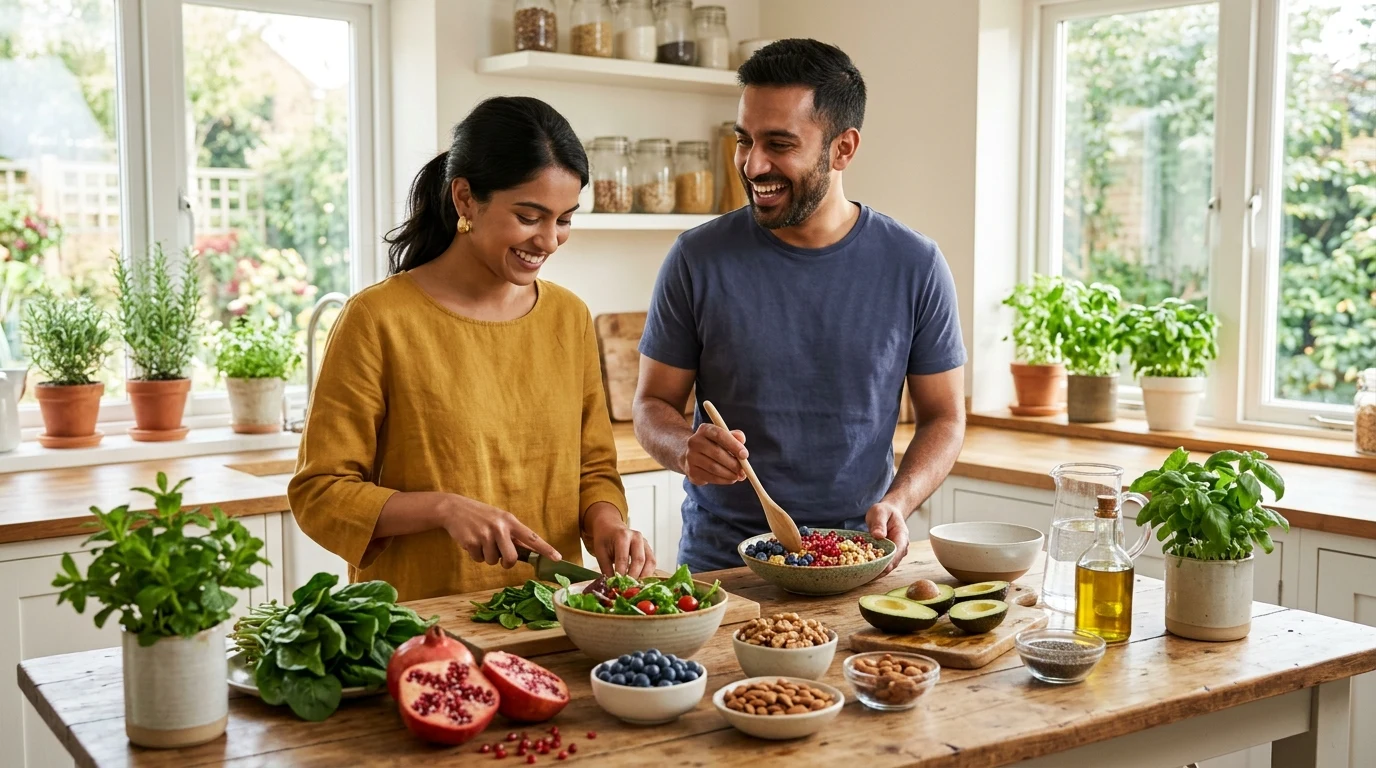


What You Need to Know (30-Second Summary)
- The 90-Day Nutrition Window: Ovarian follicles recruit over 90 days and sperm matures in 74 days; consistent nutrition builds cellular membranes.
- Mediterranean Evidence: Large cohort studies show a Mediterranean dietary pattern increases clinical IVF pregnancy rates by 40%.
- Healthy Fats Matter: Monounsaturated fats from extra virgin olive oil and Omega-3s from walnuts and fish improve pelvic blood flow.
- Insulin Stabilization: Eliminating refined sugars and trans-fats prevents sharp insulin spikes that trigger excessive ovarian androgen release.
- Targeted Micronutrients: Daily active methylfolate, CoQ10 for mitochondrial energy, and Vitamin D support gametes and endometrial receptivity.
No superfood unblocks a fallopian tube. None. But clinical nutrition matters. It feeds dividing gametes.
Every week in our Indirapuram and Noida clinics, patients ask about fertility diets.
"Nutrition is not a substitute for medical treatment, but the evidence is clear: a Mediterranean-pattern diet rich in antioxidants, healthy fats, and whole grains measurably improves egg and sperm quality."
They show me social media posts promoting exotic alkaline water, raw juice fasts, or expensive imported powders.
Much of the fertility diet industry is built on pseudoscientific marketing.
Yet genuine, evidence-based reproductive nutrition is grounded in rigorous physiology.
Gametes take months to mature. Eggs take ninety days. Sperm take seventy-four days. What you eat today matters three months from now.
The maturation of an oocyte from a resting primordial follicle to an ovulatory egg spans over ninety days.
The production of mature sperm from testicular germ cells spans seventy-four days.
Dividing cells are fragile. Sugar spikes damage them. Free radicals break DNA. Nutrient gaps stall development.
Daily food supplies raw biochemical blocks. It powers mitochondrial energy. It protects chromosomal division. It builds receptive lining.
The Anti-Inflammatory Mediterranean Dietary Foundation
The most extensively studied dietary pattern in reproductive medicine is the Mediterranean diet, adapted thoughtfully for the Indian kitchen.
Clinical trials confirm the Mediterranean pattern. Couples achieve higher pregnancy rates. Embryos reach the blastocyst stage faster. Miscarriage risks drop.
Why does this pattern succeed?
Because it directly combats the two greatest metabolic enemies of fertility: chronic low-grade inflammation and cellular insulin resistance.
The traditional Mediterranean model emphasizes whole, unrefined plant foods, high dietary fiber, monounsaturated fatty acids, lean proteins. Powerful polyphenol antioxidants.
Adapting the Model for the Indian Kitchen
You do not need imported avocados. You do not need expensive oils. Your Indian kitchen has everything you need.
The Indian kitchen is rich in fertility-enhancing ingredients when prepared with modern nutritional wisdom:.
Choose unrefined complex carbohydrates with a low glycemic index, including whole-wheat rotis and brown rice. Transition to Low Glycemic Index.
Refined carbohydrates trigger rapid surges in blood glucose.
The pancreas responds by pumping out massive pulses of insulin.
Hyperinsulinemia stimulates excess ovarian androgens. It halts follicular recruitment. It increases testicular oxidative stress.
Reduce polished white rice, refined maida, bakery white bread, and packaged breakfast cereals.
Replace them with low-glycemic, fiber-rich alternatives: traditional whole millets (jowar, bajra, ragi), steel-cut oats, quinoa, brown rice. Whole wheat rotis mixed with roasted chana flour.
Fiber slows gastric emptying, blunts glucose absorption. Binds excess circulating estrogens in the gut, promoting healthy hormonal excretion.
Eliminate industrial trans-fats and prioritize omega-3 fatty acids from walnuts, flaxseeds, and cold-pressed oils. Eliminate Trans-Fats, Embrace Omega-3s.
The type of dietary fat you consume directly dictates the flexibility and fluidity of your egg and sperm cell membranes.
Industrial trans-fats—found in commercial vanaspati, bakery puffs, biscuits, and repeated deep-frying oils—are cytotoxic to reproductive function.
Trans-fats incorporate into granulosa cell membranes, worsening insulin resistance and increasing ovulatory infertility by over seventy percent.
Throw out vanaspati. Stop reusing frying oil. Commercial trans-fats poison egg cell membranes.
Incorporate rich sources of Omega-3 Polyunsaturated Fatty Acids.
Omega-3s, particularly EPA and DHA, reduce systemic inflammation, enhance pelvic blood flow. Improve sperm membrane fluidity and motility.
For non-vegetarians, eat wild-caught fatty fish (salmon, sardines, mackerel, rohu) twice a week.
For vegetarians, consume daily walnuts, freshly ground flaxseeds, chia seeds. Unheated extra-virgin olive oil or cold-pressed mustard oil. Use pure desi ghee in modest moderation (one teaspoon daily).
Incorporate high biological value proteins into every meal, balancing plant and animal sources carefully. Plant-Forward with High Biological Value.
The Harvard Nurses' Health Study showed clear benefits. Replacing five percent of animal protein with vegetable protein cut ovulatory infertility by half.
Indian diets are notoriously carbohydrate-heavy and protein-deficient.
Adequate protein supplies essential amino acids needed for ovarian follicular fluid synthesis, enzyme production. Endometrial tissue rebuilding.
Aim for one to one point two grams of protein per kilogram of body weight daily.
Enjoy diverse plant proteins including sprouted green moong, black chana, and fresh paneer. sprouted green moong, whole black chana, rajma, chole, lentils, organic tofu, and tempeh.
Include high-biological-value animal proteins if preferred: eggs, paneer, and Greek yogurt. Boiled eggs provide exceptional choline, essential for embryonic neural tube closure.
Micronutrients That Genuinely Move the Needle
Certain micronutrients play critical biochemical roles in gametogenesis:.
Take active methylfolate to support critical cellular division and early neural tube formation. Essential for DNA synthesis, methylation, and neural tube closure. We advise active methylfolate (L-methylfolate) over synthetic folic acid, particularly in South Asian populations with high prevalence of MTHFR gene variants.
Coenzyme Q10 supplies vital mitochondrial energy to dividing eggs and powers sperm tail propulsion. The ultimate mitochondrial nutrient. Dividing oocytes require immense ATP energy to separate forty-six chromosomes without aneuploidy. Rich dietary sources include organ meats, sesame seeds. Broccoli, paired with clinical supplementation (200 to 600 mg daily).
Optimizing Vitamin D3 levels above thirty nanograms improves endometrial receptivity and balances hormones. A powerful secosteroid hormone that regulates over two thousand genes, including AMH production and endometrial receptivity. Spend fifteen minutes in morning sunlight, consume fortified foods, and correct deficiency with clinical supplementation.
Zinc and selenium act as essential trace minerals protecting gametes from oxidative degradation. Vital trace minerals for sperm protamination, testicular antioxidant defenses, and thyroid hormone conversion. Found abundantly in pumpkin seeds, sunflower seeds, and whole lentils.
Hydration and Kitchen Detox
Nutrition is also about what you do not ingest.
Drink two to three liters of clean, filtered water daily.
Hydration maintains optimal blood volume, ensures lush cervical mucus production, and facilitates renal toxin excretion.
Avoid drinking hot liquids from plastic cups or storing warm food in plastic containers.
Plastic contains Bisphenol-A (BPA) and phthalates: potent endocrine-disrupting chemicals that bind to estrogen receptors, impair egg maturation. Lower sperm counts.
Switch to stainless steel, glass, or copper water bottles and food containers.
Wash all fruits and vegetables thoroughly to eliminate pesticide residues. This act as reproductive toxins.
The 80/20 Sustainable Philosophy
A fertility diet should nourish your body and soul, not become a psychological prison.
Avoid extreme, restrictive diets that generate immense anxiety and social isolation.
Follow the 80/20 rule by eating whole, nutrient-dense home-cooked meals eighty percent of the time. eat whole, vibrant, nutrient-dense foods eighty percent of the time. Meanwhile, enjoying cultural and social meals twenty percent of the time.
Start your nutritional improvements three months before your planned conception or IVF cycle.
Feed your cells with intention. Create a nurturing biological environment, and let nature and science do their magnificent work.
Kitchen Toxins and Advanced Glycation End-Products
When discussing fertility diets, attention usually focuses on what nutrients to consume.
Equally important is avoiding kitchen-generated cellular toxins known as Advanced Glycation End-Products, or AGEs.
AGEs are harmful compounds formed when proteins or fats combine with sugars in the bloodstream, or during high-heat dry cooking.
In Indian culinary habits, deep-frying samosas, puris. Pakoras, roasting foods until charred, and consuming sugary traditional sweets generates immense amounts of dietary AGEs.
When absorbed into the human body, AGEs bind to specific cell receptors called RAGE (Receptor for Advanced Glycation End-Products).
This binding triggers chronic systemic inflammation and massive bursts of oxidative free radicals.
In women, AGEs accumulate directly in ovarian granulosa cells and follicular fluid.
Elevated follicular fluid AGEs correlate directly with poor follicle growth, brittle oocyte membranes, impaired fertilization. Lower blastocyst conversion rates.
In men, AGEs cross into seminal plasma, binding to sperm membranes and driving severe sperm DNA fragmentation.
Cooking Methods to Eliminate Advanced Glycation End-Products (AGEs)
Switch from high-heat deep-frying to gentle steaming, boiling, or light pressure cooking. Transition from deep-frying and dry roasting to moist-heat cooking: boiling, steaming, stewing, poaching. Slow simmering in curries. Moist heat dramatically suppresses AGE formation.
Marinating ingredients with lemon juice or fresh yogurt reduces advanced glycation compound formation. Marinating proteins with lemon juice, vinegar, or yogurt before cooking reduces AGE formation by over fifty percent.
Cut out sweetened packaged beverages and refined syrups that spike insulin abruptly. High-fructose corn syrups and refined sugars accelerate internal glycation cascades.
The Gut Microbiome and the Estrobolome
A revolutionary frontier in reproductive medicine is the connection between the gut microbiome and fertility.
The human gut houses trillions of symbiotic microorganisms.
A specific sub-population of gut bacteria is known as the Estrobolome.
The estrobolome produces an enzyme called beta-glucuronidase.
This enzyme metabolizes and regulates the level of free, active estrogen circulating in a woman's body.
In a healthy gut, the estrobolome maintains optimal estrogen balance: allowing necessary estrogen to enter the bloodstream to build a lush uterine lining. Meanwhile, signaling the liver to excrete excess estrogen in bile.
When gut dysbiosis occurs—driven by ultra-processed foods, chronic antibiotics, artificial sweeteners, and low dietary fiber—the estrobolome malfunctions.
It either over-produces beta-glucuronidase, triggering estrogen dominance that fuels endometriosis, polyps, and fibroids; or under-produces it. This causes low estrogen that thins the endometrium.
To nourish your gut estrobolome, include homemade fermented curds and high-fiber vegetables daily. Consume rich dietary soluble and insoluble fiber: at least thirty grams daily from diverse plant sources.
Incorporate traditional Indian fermented foods: homemade probiotic dahi, fresh buttermilk, fermented kanji, and south Indian fermented idlis.
Avoid artificial non-nutritive sweeteners like sucralose and aspartame. This decimate beneficial gut microflora.
Caffeine and Alcohol Thresholds for Conception
Patients frequently ask about daily tea, coffee, and social alcohol.
Here are the strict evidence-based limits enforced across our clinics:.
Limit total caffeine intake to under two hundred milligrams daily, equivalent to one moderate cup of coffee. Limit total daily caffeine to under 200 milligrams. This equals one standard mug of brewed coffee, or two small cups of traditional Indian chai. Higher caffeine intake constricts uterine blood vessels, reducing endometrial blood flow velocity and increasing early pregnancy loss.
For men, eliminating alcohol protects testicular testosterone synthesis and prevents sperm DNA fragmentation. For men, moderate alcohol (one or two drinks a week) has minimal impact. Heavy binge drinking suppresses testosterone, causes testicular atrophy, and spikes sperm DNA fragmentation. For women, alcohol consumption should be reduced to near zero during active conception cycles and eliminated completely during the two-week wait and pregnancy. Alcohol is directly embryotoxic.
Feed your fertility with respect. Eat fresh, whole foods. Build strong cells. Give your baby the best start.
📚 Recommended Clinical Guides
Frequently Asked Questions About Evidence-Based Fertility Diet: Foods That Boost Egg and Sperm Quality
Should women trying to conceive follow a strict keto diet?
No. Severe ketogenic diets with extreme carbohydrate restriction elevate stress cortisol and can disrupt menstrual regularity. A balanced Mediterranean diet with complex, low-glycemic carbohydrates is far safer and more sustainable for fertility.
Can a fertility diet cure blocked fallopian tubes?
No diet can unblock anatomically scarred fallopian tubes or reverse severe structural pelvic adhesions. Nutrition optimizes egg quality, sperm DNA, and uterine receptivity, but mechanical roadblocks require surgical correction or IVF bypass.
Is dairy beneficial or harmful for fertility?
Moderate consumption of full-fat, unprocessed dairy like plain curd, paneer, and milk supports healthy ovulation. Low-fat skim dairy is stripped of natural fat-soluble vitamins and associated with higher anovulatory risks.
What are the best plant-based protein sources for fertility?
Lentils, chickpeas, edamame, tofu, and walnuts provide clean plant protein. They deliver essential amino acids without spiking inflammatory markers.
How much water should I drink daily during IVF prep?
Drink two to three litres of clean, filtered water daily. Adequate hydration supports cellular fluid balance, promotes cervical mucus production, and aids kidney clearance during stimulation medication protocols.
Should I follow a strict gluten-free or dairy-free diet when trying to conceive?
A gluten-free diet is medically necessary only if you have diagnosed celiac disease or documented gluten sensitivity. High-quality fermented dairy like Greek yogurt provides beneficial probiotics, calcium, and protein that support reproductive health.
Can taking daily antioxidants replace healthy dietary habits?
No. Whole foods provide a complex matrix of vitamins, minerals, fiber, and polyphenols that work synergistically. Synthetic multivitamin pills cannot replicate the cellular antioxidant protection provided by fresh whole foods.
How does adequate hydration affect cervical mucus and uterine blood flow?
Drinking two to three litres of water daily maintains optimal blood volume and pelvic perfusion. Proper hydration ensures endocervical glands produce thin, watery, fertile mucus that assists sperm transit into the uterus.
How many whole eggs can I eat daily to optimize choline for embryo development?
Eating one to two whole eggs daily provides essential dietary choline and high-quality protein. Choline plays a vital role in embryonic gene methylation, neural tube formation, and cellular membrane synthesis.
The Path Forward: Taking Your Next Step with Confidence
Nutritional biochemistry plays an active role in cellular energy production, mitochondrial health, and follicular fluid composition. Adopting an evidence-based Mediterranean dietary pattern—rich in colourful antioxidants, leafy vegetables, legumes, extra virgin olive oil, nuts, and omega-3 fatty acids—reduces systemic inflammation and supports both oocyte and sperm development during their 90-day maturation window.
Focus on actionable kitchen changes: replace ultra-processed snacks and industrial seed oils with whole foods, minimize refined sugars and advanced glycation end-products (AGEs) by steaming or stewing rather than char-grilling, and take physician-recommended prenatal supplements containing active methylfolate, vitamin D3, and CoQ10.
Dr. Gunjan Gupta Govil and our medical team at Gunjan IVF World incorporate nutritional and metabolic optimization into every patient’s fertility roadmap. Visit our clinics in Indirapuram Ghaziabad, Janakpuri Delhi, Noida Sector 49, Greater Noida West, or Meerut to review your preconception health with our clinical team.